Understand
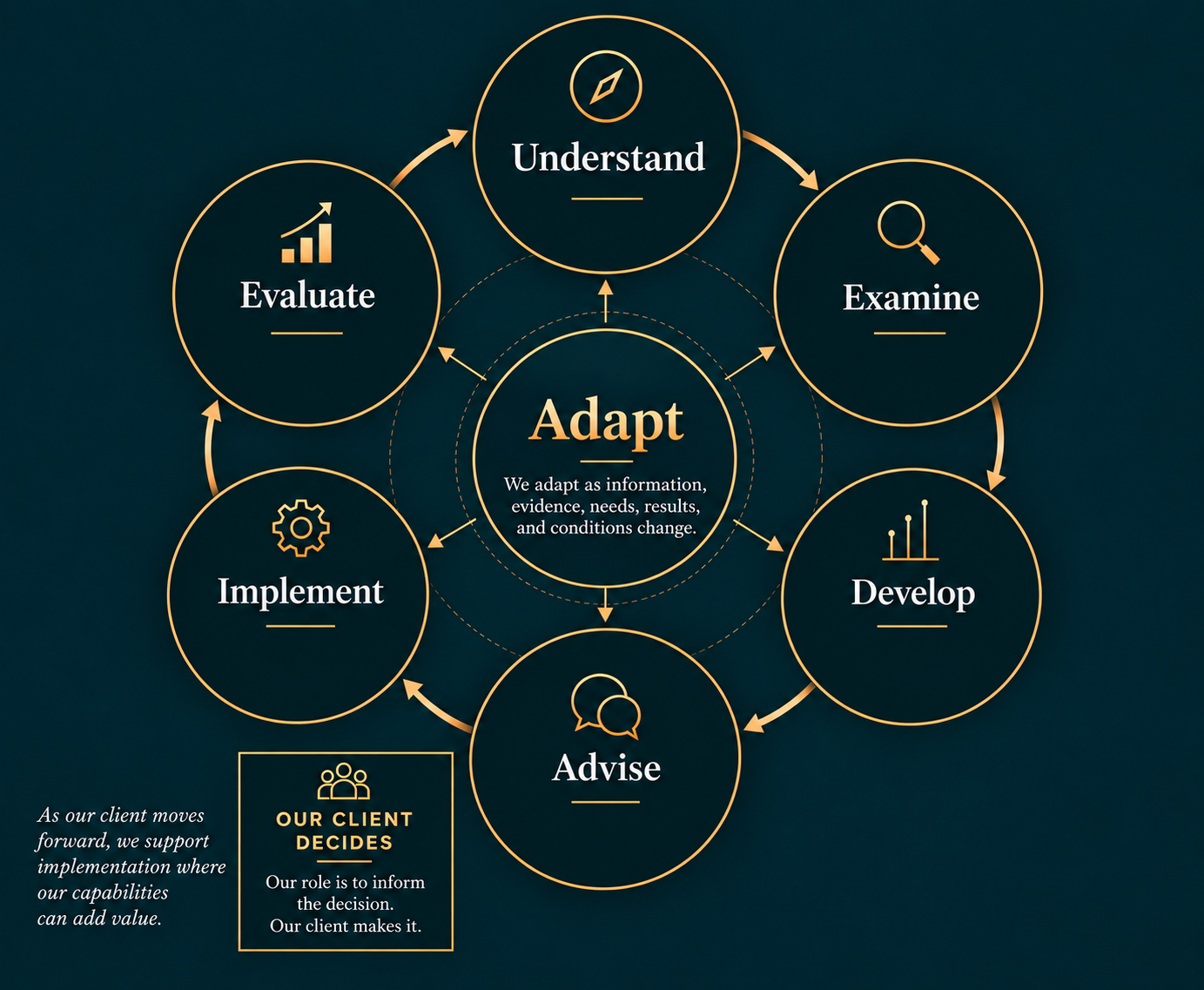
We begin by understanding where our client is, what brought them to us, and what they are trying to accomplish. We work with our client to clarify the problem, opportunity, question, or decision and understand the circumstances surrounding it. We identify what is already known, what may be assumed, what remains unclear, and what needs to be understood before determining what comes next.
Examine
We examine the information, evidence, perspectives, context, and expertise relevant to the problem. We look at what is driving the issue, how different factors relate to one another, and where dependencies, constraints, competing priorities, or uncertainties may matter. We test assumptions, consider alternative explanations and perspectives, and identify gaps that could affect our understanding or the decisions that follow.
Develop
We use what we have learned to develop potential answers, options, approaches, or solutions. We do not begin with a predetermined answer or assume there is only one viable path. We consider alternatives and examine their feasibility, risks, tradeoffs, dependencies, potential consequences, and the conditions necessary for them to work in practice.
Advise
We provide our client with candid, independent findings and recommendations based on what the available information, evidence, analysis, and our judgment support. We explain not only what we recommend, but why, including the assumptions, risks, uncertainties, tradeoffs, and implications our client should understand in determining the path forward.
Implement
Once our client determines the path forward, the focus shifts from deciding what to do to making it work in practice. We help translate the decision into action, identify and address implementation requirements and dependencies, work through issues as they emerge, and help maintain alignment between what is being done and the outcome our client is trying to achieve.
Evaluate
We evaluate what happens as decisions and solutions are put into practice. We assess progress and results against the intended outcome, identify emerging issues and unintended effects, and determine what the evidence is telling us. Where results, new information, changing needs, or conditions warrant it, we work with our client to determine what should continue, what should change, and what may need to be reconsidered.